Reading instructions
This article is the first part of the English translation of the 2019 edition of the "Ethics Guidelines for Trustworthy AI," covering the executive summary, introduction, and overall framework. The following sections follow in sequence. Basic Rights and Four Ethical Principles 、 Seven Requirements and Implementation Methods 、 Comprehensive assessment of the issue checklist and Application Opportunities, Key Concerns, and Terminology . The division into sections is for ease of reading and does not alter the original logical sequence.
The translation retains the historical context of the original text, including the planned trial activities at the time. Phrases such as "shall" and "must" are used to convey the original text's requirements regarding ethics and robustness, and do not automatically constitute current legal obligations nor provide legal compliance advice. Separate verification of legal, policy, and technical versions is recommended.
Original document note: The guidelines were prepared by an independent expert group established by the European Commission in June 2018 and published on 8 April 2019. The December 2018 draft received feedback from more than 500 participants. Members supported the overall framework but did not necessarily agree with every statement. The text reflects the expert group’s views and does not represent the Commission’s official position. Personal contacts, signatures and administrative information are excluded from this edition.
Executive summary: What does trustworthy AI need to have?
This guide aims to promote trustworthy AI. Trustworthy AI consists of three components, all of which should be met throughout the entire lifecycle of a system: first, legality, adhering to all applicable laws and regulations; second, ethical considerations, aligning with ethical principles and values; and third, robustness, both technically and socially, because even well-intentioned AI systems can cause unintended harm.
Each component is a necessary condition, but no single one is sufficient to achieve trustworthy AI. Ideally, the three elements should work in coordination, with some overlap in real-world operation. If conflicts arise in practice, society should strive to align them.
The guide provides a framework for achieving trustworthy AI. It does not specifically address the first component (legality) but focuses on the second and third, offering guidance on how to promote and ensure ethical and robust AI. The guide is intended for all stakeholders and aims to go beyond a list of ethical principles by elaborating on how to implement these principles within social-technical systems. Its guidance is structured across three levels, progressing from abstract to specific, and concludes with an overview of opportunities and major concerns brought by AI.
Level one: Establishing ethical principles from fundamental rights
Chapter one begins with fundamental rights, establishing ethical principles and related values that must be respected in the development, deployment, and use of AI. Key guidelines are as follows:
- Adhere to four principles when developing, deploying, and using AI: respect for human autonomy, prevention of harm, fairness, and explainability. Acknowledge and address potential conflicts among these principles.
- Pay special attention to children, people with disabilities, historically marginalized groups, or populations at risk of exclusion, as well as situations of power or information asymmetry, such as the relationship between employers and employees, or between businesses and consumers.
- Acknowledge that while AI brings significant benefits to individuals and society, it may also pose risks and negative impacts. Some effects are difficult to predict, detect, or measure, such as those on democracy, the rule of law, distributive justice, and even human cognition. Implement mitigation measures commensurate with the level of risk.
The original text here indicates that Articles 24 to 27 of the EU Charter of Fundamental Rights concern the rights of children, elderly people, and people with disabilities to integrate into society and the rights of workers, while Article 38 deals with consumer protection.
Layer Two: Convert the principles into seven requirements
Chapter Two builds upon Chapter One by proposing seven requirements that AI should meet, and explains how both technical and non-technical methods can be employed to achieve them. The core guidance is as follows:
- Ensure that the development, deployment, and usage processes meet seven requirements: human agency and oversight; technical robustness and security; privacy and data governance; transparency; diversity, non-discrimination, and fairness; environmental and social well-being; accountability.
- Consider both technical and non-technical approaches to implement these requirements.
- Foster research and innovation that assesses AI and drives the implementation of requirements; disseminate findings and unresolved issues to a broader public; systematically cultivate a new generation of AI ethics professionals.
- Clearly and proactively communicate to stakeholders the system's capabilities, limitations, and how requirements are implemented, helping to set realistic expectations; making people aware that they are interacting with AI.
- Promote traceability and auditability of systems, especially in critical scenarios.
- Engage stakeholders throughout the entire lifecycle. Through training and education, ensure all parties understand trustworthy AI and possess the corresponding capabilities.
- Awareness of potential fundamental tensions among different principles and requirements. Continuously identify, assess, document, and communicate these trade-offs and resolutions.
Layer three: Evaluate implementation status through specific issues
Chapter 3 provides a specific yet not exhaustive list of credible AI evaluation criteria, helping implement the requirements from Chapter 2. The list should be tailored to the specific use case of the AI system. It also focuses on ethical and robustness considerations, not a legal compliance checklist.
When developing, deploying, and using AI, adopt and adapt such evaluation checklists. However, no checklist can possibly cover all possible issues. Ensuring trustworthy AI is not about ticking boxes, but about continuously identifying and implementing requirements, evaluating solutions, improving outcomes, and involving stakeholders throughout the entire lifecycle.
The final section illustrates specific examples of valuable opportunities worth pursuing and key concerns requiring serious consideration, making several questions from the earlier framework more concrete.
The guide provides a cross-cutting foundation for various AI applications, but different contexts present distinct challenges. Therefore, it should be explored whether sector-specific guidance is needed. This guide does not replace existing or future policies and regulations, nor does it prevent the introduction of such policies or regulations. It is a document that should be continuously reviewed and updated as technology, societal environments, and knowledge evolve, serving as a starting point for discussions on "trustworthy AI for Europe," and also aiming to promote global AI ethics research, reflection, and dialogue.
The European scope herein primarily refers to EU member states and also includes systems developed or produced elsewhere but deployed and used within the EU. The original text also intends for relevance beyond the EU and mentions that Norway and Switzerland have participated in the AI Coordination Plan announced in December 2018.
Introduction: Why Propose Trustworthy AI
In its notices on 25 April and 7 December 2018, the European Commission presented a vision for "ethical, safe, and technologically advanced European AI". This vision is built on three pillars: increasing public and private AI investment and adoption, preparing for socioeconomic changes, and establishing appropriate ethical and legal frameworks to strengthen European values.
To support this vision, the committee established an independent high-level expert group on artificial intelligence, responsible for two outcomes: an AI ethics guidelines and policy and investment recommendations. The guidelines were refined through further discussion based on feedback collected from the public consultation of the draft issued on December 18, 2018; they also drew upon the work of the European Group on Ethics in Science and New Technologies and other similar practices. A total of 52 participants engaged in the discussions, committed collectively to the principle of "diversity and unity."
AI has significant potential to transform society, but AI itself is not the end goal. It is a means that holds promise for promoting the full development of individuals, enhancing personal and societal well-being, advancing shared interests, and driving progress and innovation. For example, it can help achieve the United Nations Sustainable Development Goals: promoting gender balance, addressing climate change, more efficiently utilizing natural resources, improving health, transportation, and production processes, and supporting progress in sustainability and social cohesion indicators.
To achieve these goals, AI must be human-centered, committed to serving humanity and shared interests, and improving human well-being and freedom. Opportunities come with the need for careful, balanced risk management. We are currently at a pivotal moment when we can shape the development of AI: on one hand, fostering public trust in the social and technological environments in which AI operates, and on the other, enabling producers to gain competitive advantage by embedding trustworthy AI into their products and services. Thus, it is necessary to maximize benefits while simultaneously mitigating and reducing risks.
In rapidly evolving technological environments, trust should remain the foundation for society, communities, economies, and sustainable development. Without clear and comprehensive frameworks of reliability, individuals and groups will struggle to build confidence in the development and application of technology. The guide therefore positions trustworthy AI as a foundational objective, viewing it as a pathway that balances technological advancement with ethical considerations, respects human rights, democracy, and the rule of law.
Trust is directed at the entire societal technical system.
Trust is a prerequisite for individuals and societies to develop, deploy, and use AI. If AI and the people behind it cannot demonstrate their worthiness of trust, undesirable consequences may arise, adoption of applications will be hindered, and potential social and economic benefits will go unrealized.
Trust involves not only the characteristics of the technology itself, but also the entire socio-technical system in which AI is applied. Trust issues in fields such as aviation, nuclear energy, or food safety are equally relevant: what determines human trust is not merely a single technical component, but the system and its complete operational context.
Therefore, trustworthy AI requires an holistic, systemic approach that encompasses all actors and processes throughout the lifecycle within this environment. This includes humans, public sector entities, enterprises, infrastructure, software, protocols, standards, governance, existing laws, oversight mechanisms, incentive structures, audit procedures, and reporting mechanisms for best practices.
Three components must be integrated throughout the lifecycle
components | Main meaning | Why can't it be sufficient on its own? |
|---|---|---|
Legal | Comply with all applicable laws and regulations | Complying with existing laws does not automatically resolve ethical issues not addressed by the law. |
Ethical | Adhere to ethical principles and values | Intentionally benevolent actions may still harm people due to system failures or operating environment issues. |
Stable | "Safe and reliable operation at both technical and societal levels" | Technical reliability alone cannot replace legitimate objectives and ethical judgment. |
These three components are each essential, but none is sufficient on its own; additional conditions may be needed in the future. The ideal scenario is mutual support, though in practice they may conflict, for example, when the scope and content of existing laws fall behind evolving ethical standards. As members of society, both individuals and collectives have a responsibility to ensure these three elements work together to support trustworthy AI; when laws fail to align with ethical principles, lawmakers or policymakers may need to reassess whether current laws are adequate.
Trustworthy methods establish the foundation for "responsible competitiveness," enabling individuals affected by AI to believe that their design, development, and use are legal, ethical, and robust. The guidelines aim to promote responsible and sustainable innovation, positioning ethics as a core pillar in AI development, fostering personal growth and advancing shared societal benefits, empowerment, and protection. With appropriate risk mitigation, people can fully enjoy the benefits of AI.
The use and impact of AI will not be confined by borders, necessitating global responses to its opportunities and challenges. The Guidelines encourage all parties to establish a global framework for trustworthy AI, achieving international consensus while upholding approaches grounded in fundamental rights.
Applicable Objects, Scope, and Original Trial Arrangement
This guide is intended for everyone involved in the design, development, deployment, implementation, or use of AI, or who are affected by AI, including enterprises, organizations, researchers, public service agencies, government bodies, civil society, individuals, workers, and consumers.
Stakeholders committed to achieving trustworthy AI may voluntarily use the guide as a method to fulfill their commitments, particularly by applying the practical assessment checklist in Chapter 3 during development, deployment, and usage phases. The checklist can also be supplemented and integrated into existing evaluation processes.
The guide provides general foundations, but the issues vary by context. Ethical concerns differ between a music recommendation system and a system recommending critical medical treatments; applications to consumers, businesses, employees, and government services to the public each present unique opportunities and challenges. Therefore, implementation approaches must be tailored to specific applications, and it is necessary to explore whether industry-specific supplements are needed.
The original text invited stakeholders to pilot and evaluate the checklist, provide feedback, in order to understand which items could be standardized and which required industry-specific approaches. At that time, the plan was to launch the pilot in summer 2019 and continue through the end of the year, with intended revisions to the checklist in early 2020 based on feedback. Interested parties could express their interest in participation through the European AI Alliance. Note: This reflects the historical schedule from the 2019 edition and is not a current call for participation.
Overall framework: What does each responsible party (legality, ethics, and robustness) handle?
Legal AI
AI is not operating in a world without law. The development, deployment, and use of AI have been influenced by a range of binding rules at the European, national, and international levels. The sources cited include EU primary law: treaties and the Charter of Fundamental Rights; EU secondary law: including the General Data Protection Regulation, Product Liability Directive, Free Movement of Non-Personal Data Regulation, Anti-Discrimination Directive, Consumer Law, and Workplace Safety and Health Directive; international human rights treaties, as well as European Convention on Human Rights, such as the European Convention on Human Rights; and national laws of member states. Regulations such as the Medical Devices Regulation apply to specific sectors.
Law has both negative and positive obligations, not only specifying what one cannot do, but also indicating what one should do and what one is permitted to do. While the law prohibits certain actions, it also creates conditions for other actions. The Basic Rights Constitution guarantees rights such as data protection and non-discrimination, as well as freedoms including business autonomy, artistic freedom, and scientific freedom.
This guide does not provide specific explanations for achieving legal compliance, but rather offers guidance on ethics and robustness. While portions of the latter two aspects are already reflected in existing laws, full implementation may extend beyond current legal obligations. This document does not provide legal advice, does not create legal rights, and imposes no legal obligations on third parties. Natural persons and legal entities remain responsible for complying with currently applicable and future laws that may be enacted in accordance with AI development; this guide is based on the premise that all applicable legal rights and obligations remain enforceable and must be strictly observed.
Ethical AI
Trustworthy AI goes beyond compliance. Laws may not keep pace with technological development, and at times may diverge from ethical principles or be ill-suited to address certain issues. Therefore, systems must also adhere to ethical guidelines.
Stable AI
Even if the purpose is ethically sound, individuals and society still need to believe that the system will not cause unintended harm. The system should operate safely and reliably, with preemptive safeguards in place to avoid unforeseen adverse effects.
Robustness has two dimensions. Technical robustness should reflect the application domain, lifecycle stage and other specific conditions. Social robustness requires adequate consideration of the context and environment in which the system operates. Ethics and robustness are closely connected and complementary; the principles in Chapter 1 and requirements in Chapter 2 address both dimensions.
From Principles to Implementation and Evaluation
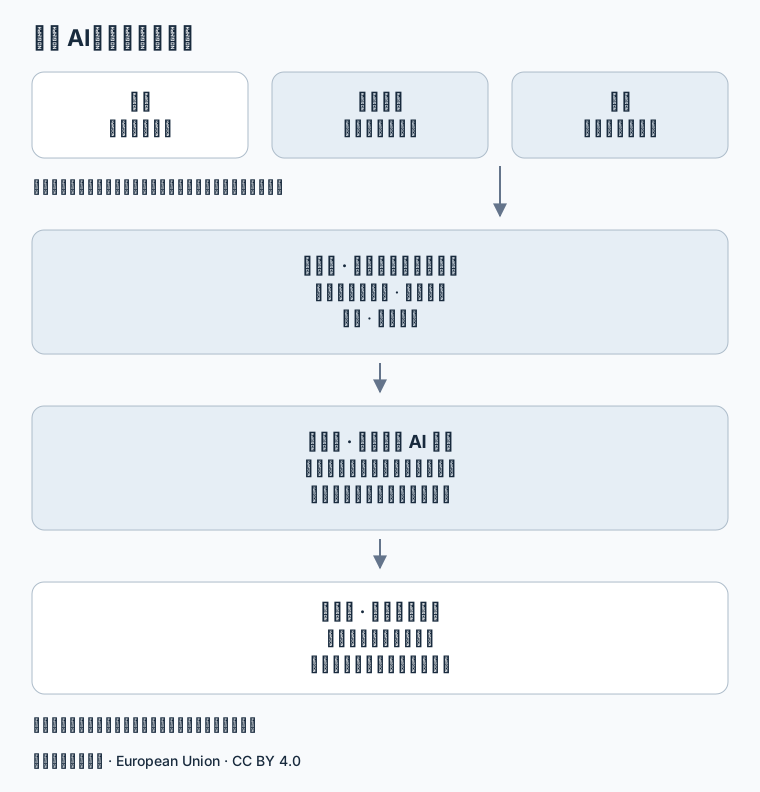
View textual explanation of the diagram
Legality, ethical compliance, and prudence are all necessary but individually insufficient. The guide emphasizes ethics and prudence: Chapter One introduces four principles (autonomy, non-maleficence, fairness, and interpretability) based on fundamental rights; Chapter Two proposes seven requirements to be implemented through both technical and non-technical methods; Chapter Three provides a non-exhaustive checklist for evaluating specific applications. Conflicts must be addressed at each stage, with continuous review and reassessment.
Chapter one establishes ethical principles based on fundamental rights; Chapter two translates these principles into seven requirements spanning the entire lifecycle, providing both technical and non-technical implementation methods; Chapter three converts the requirements into specific, non-exhaustive evaluation questions adjustable by use case. Finally, it drives further discussion through opportunities and key concerns.
Here, basic rights have two closely related but distinct meanings: as part of international and EU human rights law, they support rights that can be enforced by law, relating to legality; and as moral rights arising from a person's identity and existing independently of legal enforceability, they provide a foundation for ethics.
Next article: Basic Rights, Four Ethical Principles, and Conflicts Among the Principles . To understand its position within the overall governance framework, you may return to Trustworthy AI and Ethical Frameworks .
Reference and Extended Reading
Ethics Guidelines for Trustworthy AI, April 8, 2019, European Union. Source: Original entry for EU Digital Strategy . This article corresponds to the printed pages 2–8 of the original text.
This page is an unofficial English translation; it has been divided into sections, standardized terminology, formatted for layout, and features redrawn Chinese graphics, and does not imply official recognition by the original organization. No personal bios, identity lists, or third-party photographs have been republished. Original materials are subject to EU Digital Data Reuse Guidelines "adopt" CC BY 4.0 ; The translation and annotated redrawn figures on this page are provided under the same license. The legal and policy names of the original text retain their historical context and cannot be used as conclusions for current compliance.
"Editor's addition:" UN Sustainable Development Goals Chinese Entry Point Convenient for querying the common development goals mentioned in the original text; Charter of Fundamental Rights of the European Union Can be used to verify rights clauses.